
THE BENEFITS OF FLAX ARE ENDLESS!
FLAX IS A SOURCE OF OMEGA-3S
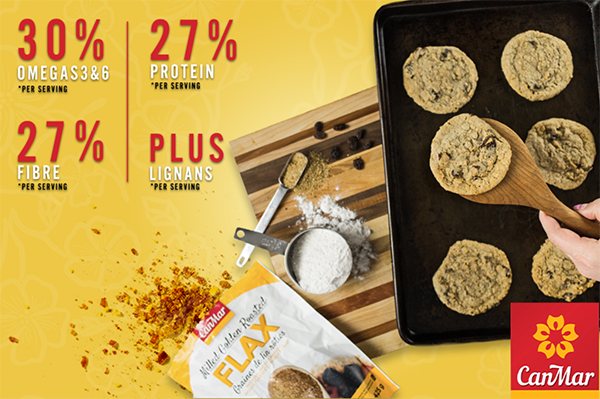
One 15 gram (2 tbsp) serving of CanMar Golden Roasted Flaxseed contains 3.5 grams of Omega-3 Alpha Linolenic Acid (ALA). Flaxseed is one of the best sources of Omega-3 ALA in the plant world.
FLAX IS A HIGH SOURCE OF FIBRE
Flaxseed contain both soluble and insoluble dietary fibre. CanMar Golden Roasted Flaxseeds contain 4 grams of dietary fibre per 15 gram (2 tbsp) serving.
FLAX IS A HIGH SOURCE OF LIGNANS
Flaxseed contains 800 times more lignans than whole wheat flour and legumes. 1 tablespoon of flaxseed contains up to 30 milligrams of lignans.
FLAX IS HEART-HEALTHY
15 grams (2 tbsp) of ground flaxseed supplies 40% of the daily amount shown to help lower cholesterol. High cholesterol is a risk factor for heart disease.
FLAX CONTAINS HIGH QUALITY PROTEIN
CanMar Flaxseeds contains valuable plant-based protein your body needs to thrive. Flaxseed is 18% protein, and protein in flaxseed is similar to soy protein.
CANMAR FLAX IS ALLERGEN-FREE
CanMar products are produced in a nut/dairy/egg-free facility, making it safe for your whole family and safe for schools.
FLAX CONTAINS HEALTHY FATS YOUR BODY NEEDS
CanMar Golden Roasted Flaxseeds are rich in the essential fatty acids Omega-3 and Omega-6. Flaxseed contains an excellent 3.5:1 ratio of Omega-3 to Omega-6, something highly desired in today’s diets.
FLAX IS GLUTEN-FREE
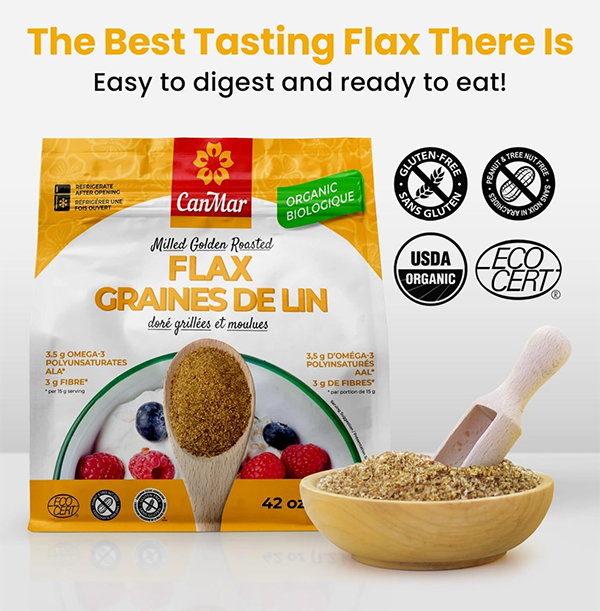
Flaxseed is naturally gluten-free, which makes it ideal for gluten-free diets. All our products are produced at our CanMar facility, where we do not process or handle any gluten- or allergen-containing grains.
FAQS
Baking
Can I bake with flax?
Yes! Unlike flax oil, our roasted flaxseeds can be used in baking cookies, loaves, casseroles, and more. Flaxseed has a protective outer coating that will prevent the oil from turning rancid. Check our recipe section to see how CanMar golden roasted flax makes a great addition to all your favourite recipes.
Can I replace flour with roasted flaxseed in baking?
Flaxseed is low in carbohydrates (starches and sugar) but very high in fibre. Therefore, only part of the flour amount can be replaced with milled roasted flaxseed. As a general rule, you can replace 8-10% of the flour with milled roasted flaxseed for great results.
When adding whole seed roasted flaxseed to a recipe for cookies, muffin, or loaf, add 2-4 tbsp for excellent results.
Can flaxseed function as a thickening component?
Roasted flaxseed can replace dry bread crumbs in hamburger patties, casseroles, meatloaf, and meatballs.
Milled roasted flaxseed is also ideal for thickening sauces, soups or stews. Add milled roasted flaxseed at the end of the cooking process, stir and let sit for 5 minutes before serving.
For a recipe of four servings:
- Add 2 tbsp milled roasted flaxseed to tomato soup or vegetable soup at the end of the cooking process
- Add 4 tbsp milled roasted flaxseed to meat sauces
- Add 1 tbsp milled roasted flaxseed to homemade dressings or dips
Can flaxseed replace the entire fat in baking?
Yes. Flax can be substituted for all or some of the fat, depending on the recipe. Substitute 3 tbsp milled roasted flaxseed for 1 tbsp margarine or butter. Please note that if you substitute all of the fat in the recipe with flax, you will need to increase your liquid by 75% of the amount of ground flax you are adding as flaxseed absorbs moisture. Please also note that baking with flax as a fat substitute will cause baked goods to brown more quickly.
Can flaxseed replace eggs?
Yes. To replace one egg, mix 1 tbsp milled roasted flaxseed with 3 tbsp lukewarm water, and let sit for 3 minutes. Product might brown easier. This is a great option for vegan or vegetarian diets!
Can flaxseed replace parts of flour?
Yes. Flaxseed contains mucilage gum, which provides unique functional properties like thickening, gelling, emulsification, foaming ability, and stability. Adding flaxseeds into baked goods provides stability and good loaf volume. For optimum results, replace milled roasted flaxseed as follows:
- Breads: replace up to 8% of dry weight ingredients with roasted flaxseed
- Muffins/granola bars: replace up to 30% of dry weight ingredients with roasted flaxseed.
- General: for best results, substitute 15% of the flour weight or 8% of dry ingredients weight with milled roasted flaxseed. For best results, also increase liquid by 75% of the flax weight.
What happens if I use too much flaxseed in a baked good?
The ratio of flaxseed to dry ingredients depends on the type of baked good. Flaxseed is relatively high in fat and low in carbohydrates, and also lacks gluten which works as a stabilizer in baked goods. Therefore, for very fine and delicate products, use very low amounts of milled roasted flaxseed. Cakes, which are lighter in texture, will become chewy and dense if a high ratio of flaxseed is added. For muffins, breads, or cookies and products with a firmer consistency, allow for more flaxseed- up to 30-50% of the dry ingredient weight.
Gluten Free
How can roasted flaxseed contribute to a gluten-free diet?
Plain roasted flaxseed is naturally gluten-free and a person sensitive to gluten can enjoy roasted flaxseed in many ways. CanMar flax is produced in a facility where no other gluten-containing ingredients are processed, so consumers sensitive to gluten do not need to worry about cross-contamination. CanMar Golden Roasted Flaxseeds carries the gluten-free logo trademark of the Natural Foundation of Celiac Awareness, BRCGS, and Canadian Celiac Association.
Flaxseed is a source of dietary fibre and of Omega-3 polyunsaturated fatty acids. Therefore, it can become an important part of the gluten-free diet. Flaxseed is a very versatile product and easy to use and its application in the kitchen is almost without limits.
Flaxseed is considered an oil seed. Adding 1-2 tbsp of golden roasted flaxseed to various food items is an excellent way to increase the amount of essential fats in the diet.
- Golden Roasted Flaxseed provides 3.5g of Omega-3 polyunsaturated fat per 15g serving.
- Roasted flaxseed is a source of dietary fibre and provides 3g dietary fibre per 15g serving.
- Many available gluten-free flour substitutes are low in fibre and are not enriched with iron or vitamins of the B group. Adding roasted flaxseed to a gluten-free flour mixture can drastically improve nutrient content in baked products.
Do you have any gluten-free baking tips?
Yes. Please refer to our recipe page for a variety of gluten-free recipes that incorporate flaxseed.
To measure flour, whisk it in the canister a few times to aerate it and then lightly spoon it into a measuring cup before levelling it off with a knife.
- Don’t use the measuring cup as a scoop; you’ll get up to 20% more flour which can result in dry baked items.
- Don’t pack the flour down and don’t measure dry ingredients in spouted glass measuring cups (meant for liquids) because you may get more than necessary.
- Buy gluten-free flours in sealed packages rather than in bulk bins to avoid cross-contamination with gluten-containing grains and flours.
- When replacing unsalted butter with dairy-free margarine or buttery spread (which contain salt), you may need to reduce the salt in the recipe by approximately 25%.
Do you have a great gluten free flour mixture with flaxseed?
Yes. This gluten-free flour blend is versatile and works with most baking recipes. It contains 20% of the dry ingredient weight as milled roasted flaxseed:
- 1 1/2 cups brown rice flour (240 g)
- 1 1/2 cups potato starch (288 g)
- 1 cup tapioca flour (120 g)
- 1 cup milled roasted flaxseed needs (130g)
In a large bowl mix all ingredients and store in an airtight container. Makes 5 cups.
How much flaxseed can I use in a gluten free flour mixture?
For most baked goods replace 10-30% of the dry ingredient weight with milled roasted flaxseed.
For breads, replace up to 30% of the dry ingredient weight with milled roasted flaxseed.
For muffins and granola bars, replace up to 50% of the dry ingredient weight with milled roasted flaxseed.
How can I incorporate flax into a gluten-free diet?
CanMar Golden Roasted Flaxseed is perfect for the celiac or gluten-free diet. Here are some great ways to include CanMar Golden Roasted Flaxseed into your daily diet:
- Replace 1 cup of wheat flour with 1 cup of gluten-free flour blend with roasted flaxseed for recipes like muffins, breads, loaves, cookies
- Replace 10-50% of the dry ingredients weight with milled roasted flaxseed for great results in baked goods
- Replace up to 30% of flour base with milled roasted flaxseed in breads
- Add milled roasted flaxseed to hamburger patties and meatloaf (2 tbsp per 1lb of ground meat)
- Use milled roasted flaxseed as thickening agent in soups or stews (2 tbsp per 4 cups liquid)
- Top your porridge with 1-2 tbsp milled roasted flaxseed
- Add milled roasted flaxseed to a smoothie or milkshake (2 tbsp per 1 cup milk)
- For polenta, use ¼ cup milled roasted flaxseed to ¾ cup of corn flour for added fibre
- Sprinkle 1 tbsp whole or milled roasted flaxseed over your salad or stir-fry
- Mix 2 tbsp milled roasted flaxseed into a serving of rice for a special pilaf
General
What is the difference between flaxseed and flaxseed oil?
The advantage of eating flaxseed over flax oil is that flaxseed is a complete food providing the benefits of Omega-3, 6 & 9 EFAs, fibre, protein, plant lignans, vitamins, minerals, and amino acids. Flax oil, expelled from the flaxseed, contains the EFAs but none of the fibre, protein, or plant lignans. Our Golden Roasted Flaxseed contains approximately 45-46% oil.
What is flaxseed?
Is there a difference between brown and golden flaxseed?
The short answer is no. The long answer is that despite the colour difference, they both have the same nutritional characteristics. The nutritional value of flax may vary due to climatic conditions and the amount of daylight during the growing period. Some may prefer the taste of the golden flax- this is due to the tannins found in the seed coat, which to some may taste sweeter when compared to brown flaxseed.
What foods do you recommend mixing in CanMar flax?
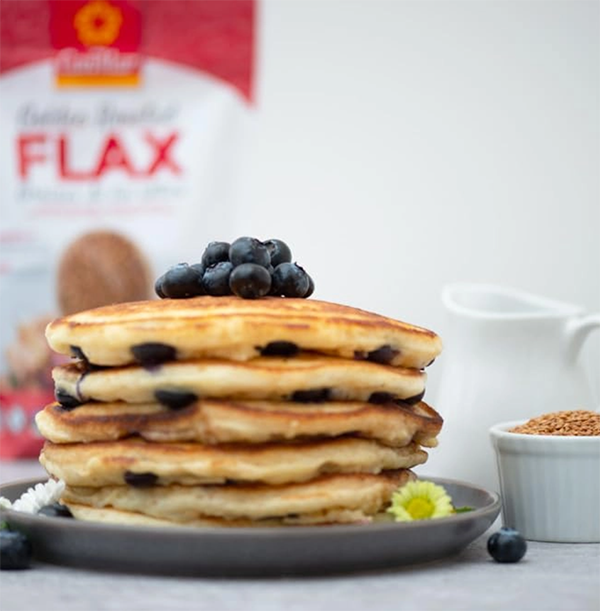
Golden roasted flax tastes great in sweet and savoury foods. Most consumers start out with topping their yogurt or cereals in the morning, or blending it in a smoothie or shake. A flax muffin or cookie with golden roasted flax is easy to master!
Check out our recipe page for more ideas.
How long will a small bag (425g) of CanMar flax last me if I consume 2 tablespoons per day?
For one person consuming 15g per day, a 425g CanMar flax bag supplies you with delicious roasted flax for 28 days.
Does CanMar flax need to be ground?
Our CanMar flax can be consumed right out of the bag. The crunchy roasted seeds can be chewed easily without the need to pre-mill.
CanMar also offers milled golden roasted flaxseeds. We do not recommend that our customers grind flaxseeds at home as the heat from the blender can destroy the Omega-3 content. CanMar has a patented roasting process and a specially designed cleaning and milling process, which allow us to roast and cold mill the flaxseeds without losing any nutritional value.
Non-roasted raw flaxseed needs to be ground to obtain maximum benefits as they are hard to chew. Raw seeds cannot be broken up by chewing and simply pass through the body undigested. This is why CanMar milled Golden Roasted Flax is so popular- we have done the work for you and provided you with a convenient way to eat healthy! Choose whole seed or milled crunchy roasted flaxseeds for convenience and taste.
How do you recommend I store CanMar golden roasted flax and for how long will it last once the bag is opened?
Nutritional Questions
Is it possible to consume too many essential fatty acids (EFAs)?
It is not possible to overdose on EFAs. In thousands of studies worldwide, no serious side effects of EFA supplementation have been reported. Minor side effects may include bloating, nausea, upset stomach, burping, and loose stools (diarrhea). To avoid these minor side effects, take flaxseed as part of a meal, start with lower amounts and increase gradually, and/or divide the daily dose into smaller portions. Please also ensure your daily water intake, as flaxseed is loaded with fibre.
How much flax seed should a person consume?
Health Canada has supported a health claim for flaxseed based on scientific evidence that shows a correlation between flaxseed consumption and its cholesterol lowering effects. The claim is based on a consumption of 40g milled flaxseed, per day, per person. Read more here.
The Flax Council of Canada recommends consuming 1-2 tablespoons of flax per day to achieve the health benefits shown in clinical studies. This recommendation is based on the Alpha-Linolenic Acid (omega-3 fatty acid) recommendation.
The National Academy of Science Institute of Medicine (NASIM) established an adequate daily intake for Omega-3 ALA ADI of 1.6 g of ALA (Omega-3)/day for men and a 1.1 g of ALA/day for women. Studies show that higher daily consumption of flaxseed is associated with greater health benefits. A good aim for both men and women is to consume 2-6 tbsp (15-40g) of flax per day.
It is important to drink sufficient water when consuming flaxseed.
* RESOURCE SOURCES
Flaxseed—a potential functional food source
Flax and flaxseed oil: an ancient medicine & modern functional food
Flaxseed Lignans as Important Dietary Polyphenols for Cancer Prevention and Treatment: Chemistry,
Dietary Flaxseed: What We Know and Don’t Know About Its Effects on Cardiovascular Disease
Naghshi S, Aune, D, Bevene, J, et al. BMJ 2021; 375 doi: https://doi.org/10.1136/bmj.n2213